Electronic Clock Movements in All Their Marvel
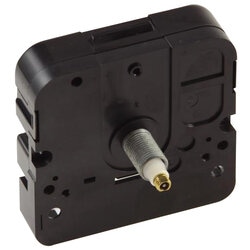
Clock movements are what make watches operational, keeping an eye on how much time has elapsed and pointing the hands to their proper spots on the dial constantly. Electronic clock movements carry out these features utilizing electrical power (distinct from mechanical power). Additionally, the electronics system allows timekeeping expansions and numerous other features that would certainly be difficult or perhaps impossible to accomplish on a mechanical platform.
Mechanical clock movements represent the historic and typical method while at the same time giving a strong structure for the watch design of today. The old method transformed prospective energy (a hanging weight or coiled springtime) right into kinetic energy (a rotating flywheel) managed by pendulums and escapements. Connected with this technique were particular limitations enforced, a vital one being the requirement to re-hoist the weights or rewind the spring occasionally.
The contemporary motor layout did away with the weights, springs, pendulums, and gears, changing them with a little quartz crystal that normally shakes when submitted to electromotive force. These resonances (at the crystal's reverberating regularity) produce a pulse stream that can be counted, and the running overall ends up being a method of tracking elapsed time. Utilizing software, the momentary pulse count total is exchanged hand settings for secs, mins, and hours.
That's the idea of just how basic timekeeping operates. The outside look of the clock is the same for both mechanical and digital movements, however the insides are entirely various, affording the electronic approach more space while a software application structure offers much more versatility to press the modern technology ever additionally. Examples are easily realized time expansions and innovative novelties.
An additional advantage of using software is that expiring secs are no longer bound to the escapement's tick-and-stop activity. You can obtain movements that replicate this familiar impact, however you can likewise get movements that move the pre-owned continuously around the dial without jerks and without audible ticks (which is handy if the clock is in the bed room).
Since time is routine, when movements get to a certain point (noontime, claim, or midnight), everything resets. Requirement motors reset every twelve hours; those that go much longer before resetting apply time extensions. The easiest time extension is once a day (i.e., 1 day) rather than twice a day.
The 24-hour period suggests a calibrated dial that compares AM and PM (e.g., with extra digits in between 13 and 24 dispersed around the area). Various other clock motors reset once a week or when a month, with matching dial and hand calibrations. As an example, the 7 days of the week are printed rotationally in the dial facility, and an added hand progressing once daily at midnight to the following one in order.
A different type of time extension entails revealing tide level, either on its own or incorporated right into a standard clock. The prime component of trend degree is the lunar cycle of 1 day and 50 mins, simply a different duration of reset. This is something that is simple for electronic movements yet relatively hard for mechanical ones.
Uniqueness are not new technologies to clockmaking, however digital movements have a tendency to reveal even more complexity than older mechanical versions because software program controls every little thing. Chiming is an uniqueness that has in a sense been modernized with electronics. The tunes are normally manufactured or stored in memory as experienced waveforms.
A lot of movements that provide this function allow choosing among Winchester, St. Mary's, and Whittington melodies. Sometimes one can also tape-record his/her very own sound(s) to play on the hour (and perhaps every quarter-hour). One more linked function is giving an hour count.
Clockmakers are likewise able to make use of modern electric motors to reproduce uniqueness from the past, such as pendulums that do not add to the timekeeping yet oscillate just for nostalgia functions. It is also simpler for them to fix and restore heirloom timepieces. The viewers is urged to discover on the net to experience firsthand digital clock movements in all their marvel.